
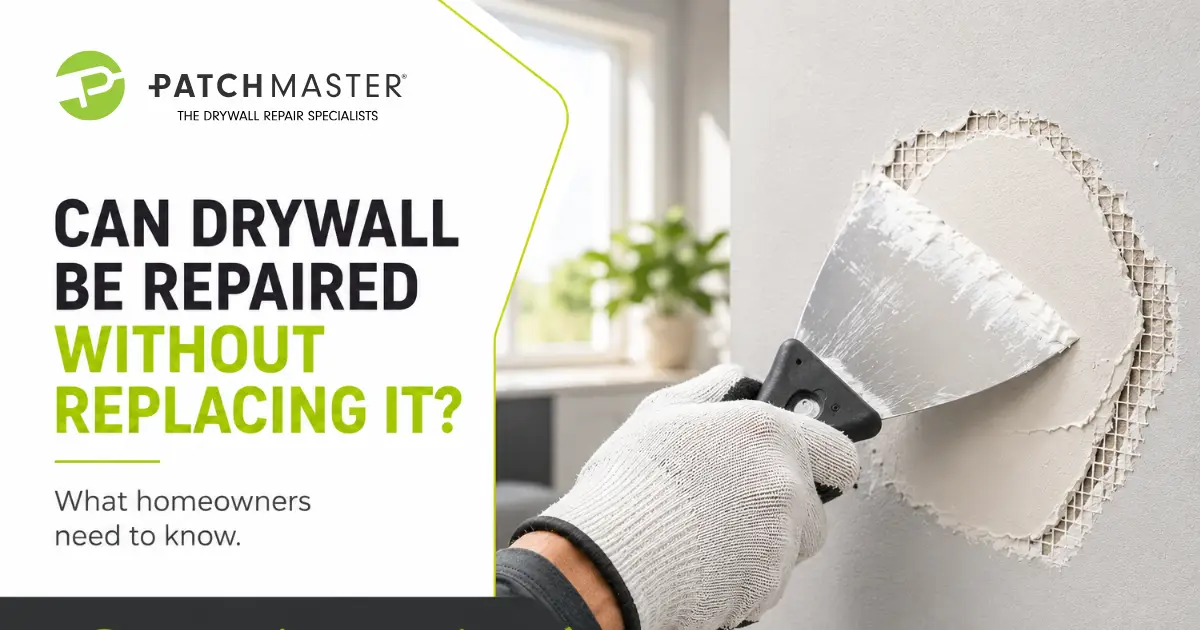
When homeowners discover a hole, crack, stain, or damaged section of drywall, one of the first questions they ask is:
Can drywall be repaired, or does it need to be replaced?
The good news is that in many cases, drywall can be successfully repaired without replacing an entire wall or ceiling. The right solution depends on the size of the damage, the cause of the issue, and whether the drywall has suffered structural deterioration.
Below, we’ll explain when drywall repair is possible, when replacement may be necessary, and what homeowners should know before starting a project.
The Short Answer
Most drywall damage can be repaired.
Common issues such as nail pops, small holes, dents, cracks, and minor water damage can often be fixed by patching, refinishing, texture matching, and repainting the affected area.
Complete drywall replacement is typically reserved for situations involving extensive water damage, mold growth, fire damage, or significant structural deterioration.
Types of Drywall Damage That Can Usually Be Repaired
Small holes caused by doorknobs, furniture, wall anchors, or everyday wear and tear are among the easiest drywall repairs.
A professional technician can patch the damaged area, sand it smooth, match the surrounding texture, and repaint the surface so the repair blends naturally with the rest of the wall.
Nail Pops
Nail pops occur when fasteners shift beneath the drywall surface, creating small circular bumps.
While they may seem minor, nail pops often reappear if they are not repaired properly. A professional repair typically involves securing the drywall, repairing the surface, and refinishing the area.
As homes naturally settle over time, cracks can develop around doors, windows, ceilings, and corners.
Most cosmetic settlement cracks can be repaired without replacing drywall. However, recurring or widening cracks should be evaluated to rule out larger structural concerns.
Minor Water Damage
Water damage does not always require full replacement.
If the drywall has dried completely and remains structurally sound, localized repairs may be possible. The damaged area can often be cut out, patched, textured, and repainted.
When Drywall Should Be Replaced
Although many issues can be repaired, replacement may be the better option when drywall has sustained extensive damage.
Severe Water Damage
Drywall that has become soft, swollen, crumbling, or warped often requires replacement.
Water can weaken the gypsum core, making repairs ineffective if the damage is widespread.
Mold Growth
If mold is present inside the wall cavity or within the drywall itself, affected sections should typically be removed and replaced after the source of moisture has been addressed.
Fire Damage
Smoke, heat, and fire can compromise drywall integrity. Depending on the extent of the damage, replacement may be necessary to restore safety and appearance.
Large-Scale Renovations
Sometimes drywall replacement is the most efficient option during remodeling projects, especially when multiple sections of a room have been opened for plumbing, electrical, or structural work.
How Professionals Match Existing Texture
One concern many homeowners have is whether a drywall repair will be noticeable.
Professional drywall repair specialists use texture-matching techniques to blend repairs with surrounding surfaces. Whether your home has orange peel, knockdown, skip trowel, smooth finish, or another texture style, experienced technicians can often create a seamless appearance.
Proper texture matching is one of the biggest factors that separates professional repairs from DIY patch jobs.
Is It Cheaper to Repair or Replace Drywall?
In most situations, repair is more affordable than replacement.
Repairing a localized area generally requires:
- Less labor
- Less material
- Less painting
- Less disruption to the home
Replacement becomes more cost-effective only when damage is extensive or affects large sections of a wall or ceiling.
Frequently Asked Questions
Can drywall be repaired after a plumbing leak?
Yes. Once the leak has been fixed and the area has dried completely, many drywall sections can be repaired. The extent of the damage will determine whether repair or replacement is recommended.
Can ceiling drywall be repaired?
Yes. Ceiling drywall can often be patched and refinished, especially when damage is limited to a specific area.
Will the repair be visible afterward?
A properly completed repair should blend with the surrounding wall or ceiling. Texture matching and color-matched painting play an important role in achieving a seamless finish.
How long does drywall repair take?
Many common drywall repairs can be completed in a single visit, although drying times for joint compound, texture, and paint may extend the overall project timeline.
The Bottom Line
In most cases, drywall does not need to be replaced. Small holes, cracks, dents, nail pops, and many forms of localized damage can be professionally repaired while preserving the existing wall or ceiling.
The best way to determine the right solution is to have the damage evaluated by a drywall repair specialist who can assess the extent of the problem and recommend the most effective repair approach.
If you’re dealing with drywall damage and want an expert opinion, contact your local PatchMaster team to schedule an assessment and learn whether repair or replacement is the best option for your home.
Need Professional Drywall Repair?
Whether you’re dealing with a hole in the wall, ceiling damage, settlement cracks, or water-damaged drywall, PatchMaster can help. Find your local PatchMaster location and request a free estimate today.


