
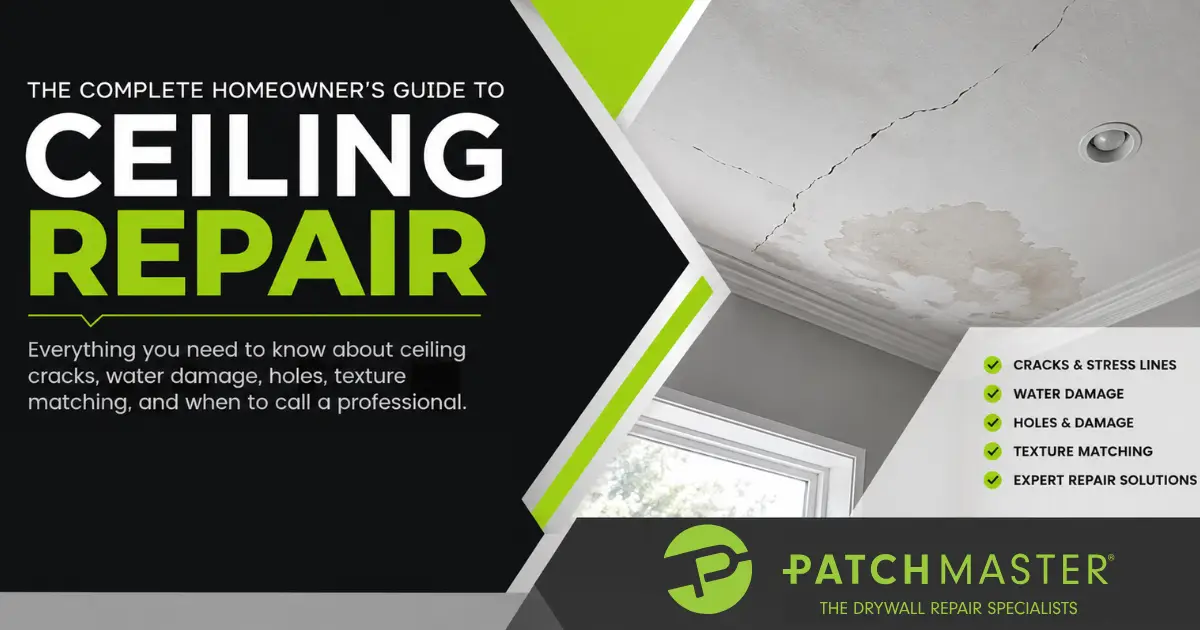
The Complete Homeowner’s Guide to Ceiling Repair
A damaged ceiling can be one of the most concerning problems homeowners face. Whether you’ve noticed a hairline crack, a water stain, a sagging section of drywall, or a hole left behind after plumbing or electrical work, it’s natural to wonder whether the damage is cosmetic or a sign of a larger issue.
The good news is that most ceiling damage can be professionally repaired without replacing the entire ceiling.
This guide explains the most common causes of ceiling damage, when repairs are possible, what the repair process looks like, and when it’s time to call a professional.
What Causes Ceiling Damage?
Ceilings experience many of the same issues as walls but are often more vulnerable because they support their own weight and may be exposed to water from above.
Some of the most common causes include:
- Natural home settling
- Roof leaks
- Plumbing leaks
- HVAC condensation
- Structural movement
- Nail pops
- Previous poor-quality repairs
- Impact damage
- Moisture and humidity
- Remodeling projects
Understanding what caused the damage is the first step toward choosing the right repair.
Common Types of Ceiling Damage
Ceiling Cracks
Small hairline cracks are often caused by your home’s natural settling and seasonal expansion and contraction.
Longer cracks, widening cracks, or cracks accompanied by sagging may indicate a more significant issue that should be evaluated before repairs begin.
Water-Damaged Ceilings
Water stains are often the first visible sign of a roof leak, plumbing leak, or HVAC issue.
Even after the leak has been repaired, damaged drywall may still need to be replaced to restore the ceiling’s appearance and structural integrity.
Ceiling Holes
Many homeowners discover holes in their ceilings after:
- Plumbing repairs
- Electrical work
- HVAC installations
- Recessed lighting projects
- Home renovations
Fortunately, these openings can usually be patched and blended seamlessly into the surrounding ceiling.
Nail Pops
Small circular bumps or cracks around fasteners are common as homes age.
Professional repairs secure the drywall properly before refinishing the surface to help prevent the issue from returning.
Textured Ceiling Damage
Matching an existing ceiling texture is often one of the most challenging parts of ceiling repair.
Whether your home has orange peel, knockdown, popcorn, skip trowel, or another texture, an experienced drywall repair professional can blend repairs so they are far less noticeable after painting.
Are Ceiling Cracks Dangerous?
Not every ceiling crack indicates a structural problem.
Hairline cracks caused by normal settling are common in many homes.
However, you should have your ceiling inspected if you notice:
- Cracks that continue growing
- Multiple intersecting cracks
- Sagging drywall
- Water stains
- Soft or spongy drywall
- Ceiling sections pulling away from framing
Identifying the cause of the damage is just as important as repairing the visible crack.
Can Ceiling Drywall Be Repaired?
In most cases, yes.
Professional ceiling repair can restore:
- Cracks
- Holes
- Water damage
- Nail pops
- Tape seam failures
- Texture damage
- Minor sagging caused by localized drywall damage
Only widespread deterioration or severe structural damage typically requires replacing large sections or the entire ceiling.
How Professional Ceiling Repair Works
Every repair is unique, but the process generally includes:
- Inspecting the damaged area.
- Removing loose or damaged drywall if necessary.
- Installing new drywall where needed.
- Applying joint tape and compound.
- Sanding the repaired surface smooth.
- Matching the existing ceiling texture.
- Priming the repaired area.
- Painting for a consistent finish.
Professional repairs focus on blending the repaired area with the surrounding ceiling for a clean, finished appearance.
Why Texture Matching Is So Important
Many homeowners assume repairing the drywall is the difficult part.
In reality, matching the existing ceiling texture often requires the greatest skill.
Even a perfectly repaired patch can remain obvious if the surrounding texture isn’t properly recreated.
Professional texture matching helps repairs blend naturally with the rest of the ceiling, minimizing visible transitions after painting.
Should You Paint After Ceiling Repair?
Yes.
Fresh drywall repairs should always be properly primed before painting.
Many homeowners choose to repaint the entire ceiling to create a uniform appearance, especially if the existing paint has faded over time.
Proper preparation ensures the repaired area blends as seamlessly as possible.
DIY Ceiling Repair vs. Hiring a Professional
While small cosmetic repairs may seem straightforward, ceilings present unique challenges.
Working overhead, matching textures, controlling dust, and achieving a smooth finish often require specialized tools and experience.
Professional drywall repair helps homeowners avoid uneven patches, flashing paint, and noticeable texture differences that can make repairs stand out.
How Long Does Ceiling Repair Take?
Repair timelines depend on the size of the damaged area, drying time between coats of joint compound, texture application, and painting.
Small repairs may be completed quickly, while larger repairs involving water damage or multiple sections of drywall can require additional time to ensure a high-quality finish.
Frequently Asked Questions About Ceiling Repair
Can ceiling drywall be repaired without replacing the entire ceiling?
Yes. Most ceiling damage can be repaired by replacing only the damaged section.
What causes cracks in a ceiling?
The most common causes include natural settling, seasonal movement, moisture, and previous poor-quality drywall finishing.
Can water-damaged ceilings be repaired?
Yes. After the source of the leak has been corrected, damaged drywall can often be repaired or replaced.
Can textured ceilings be repaired?
Absolutely. Professional texture matching helps blend repairs into the surrounding ceiling.
Should I worry about a crack in my ceiling?
Small hairline cracks are often cosmetic, but widening cracks, sagging, or water damage should be evaluated promptly.
Can popcorn ceilings be patched?
Yes. Popcorn ceilings can often be repaired and blended, although matching older textures may require specialized techniques.
Can ceiling repairs be painted immediately?
No. Joint compound and repairs must fully dry before priming and painting.
How do I know if my ceiling needs repair or replacement?
A professional inspection can determine whether localized repairs are sufficient or if more extensive replacement is necessary.
Trust PatchMaster for Professional Ceiling Repair
Whether your ceiling has cracks from normal settling, water damage after a leak, holes left behind by remodeling projects, or textured areas that need to be restored, professional repairs can help return your ceiling to its original appearance.
PatchMaster specializes in drywall ceiling repair, ceiling crack repair, texture matching, plaster repair, and interior painting. Our experienced technicians focus on repairs that blend naturally with your existing ceiling, helping homeowners restore their spaces with quality workmanship and lasting results.
If you’ve noticed damage to your ceiling, contact your local PatchMaster to schedule a professional evaluation and learn how expert ceiling repair can restore your home.


