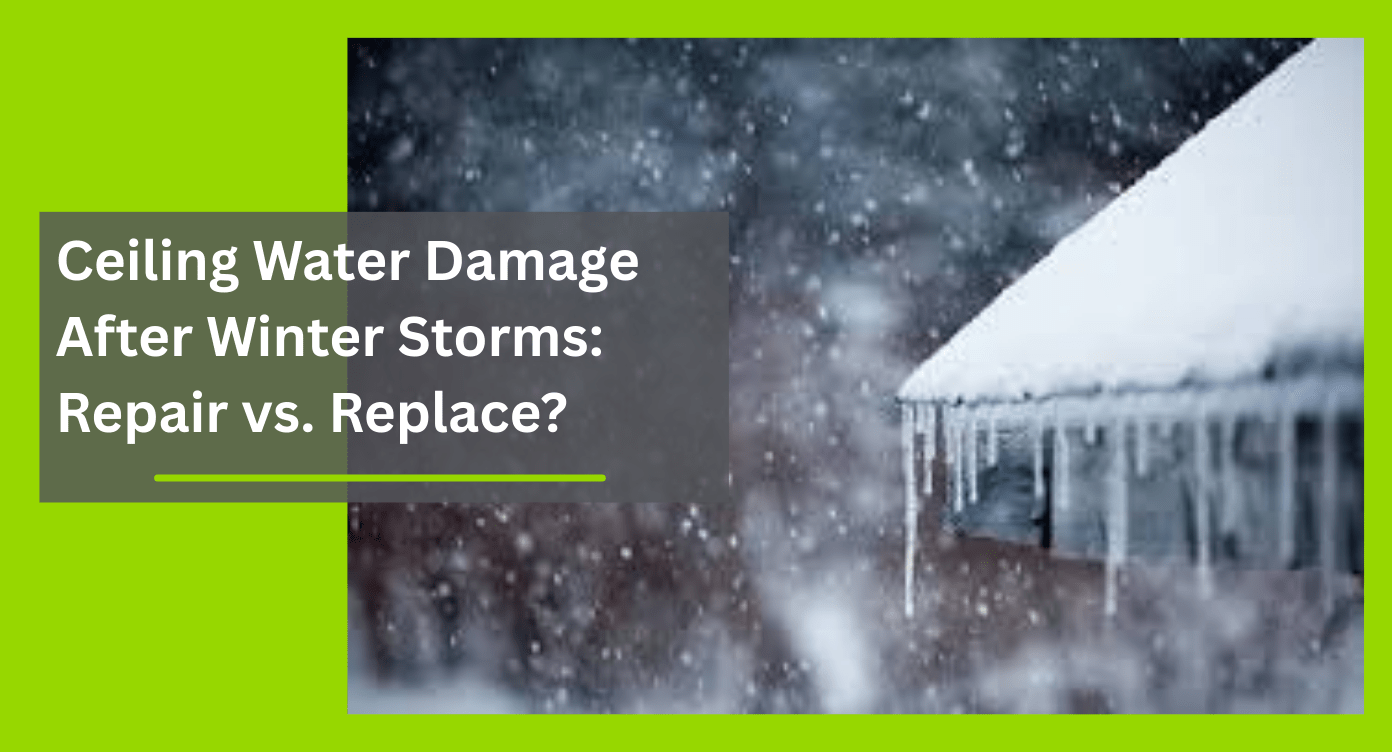
Winter storms can take a toll on your home, especially your ceilings. Ice dams, roof leaks, and frozen pipes often cause ceiling water damage that isn’t immediately noticeable.
If you’re dealing with ceiling water damage after a winter storm, here’s how to determine the right next step..
Common Causes of Ceiling Water Damage in Winter
After severe winter weather, ceiling damage is often caused by:
- Ice dams forcing water under roofing material
- Frozen pipes bursting above the ceiling
- Snow melt leaking through roof penetrations
- Poor attic insulation or ventilation
-
These issues often result in hidden moisture, even when visible damage appears minor.
Signs Your Ceiling May Be Repairable
In some cases, ceiling drywall repair may be sufficient. Repairs are often possible when:
- Stains are small and localized
- Drywall remains firm and flat
- No sagging or crumbling is present
- The water source has been fully resolved
-
Quick action is critical; delaying repairs increases the likelihood that replacement will be necessary.
When Ceiling Drywall Should Be Replaced
Replacement is usually the safer option when you notice:
- Sagging or bowing drywall
- Soft, swollen, or crumbling areas
- Recurring stains after drying
- Large sections affected by water
- Evidence of prolonged moisture exposure
-
Water-damaged ceiling drywall often loses its structural integrity and cannot be reliably restored.
Why Drying Alone Isn’t Enough
Many homeowners assume that drying the area solves the problem. Unfortunately:
- Wet drywall can trap moisture internally
- Paint and texture will fail over time
- Mold risk increases behind ceilings
This is why professional ceiling water damage repair typically involves removing compromised drywall rather than covering it up.
Repair vs Replace: Why Timing Matters
The longer damaged drywall stays in place, the more extensive repairs can become.
Prompt evaluation helps:
- Limit how much ceiling needs replacement
- Prevent damage from spreading
- Reduce repair timelines and disruption
-
When to Call for Emergency Ceiling Drywall Repair
You should seek professional help if:
- Water damage followed a winter storm
- Ceiling drywall feels soft or uneven
- Stains continue to grow or reappear
- Damage is near lighting or electrical fixtures
-
Winter-related ceiling damage is rarely cosmetic. It’s usually structural.
If you’re facing ceiling water damage after a winter storm, understanding whether to repair or replace drywall early can prevent far bigger problems later. When in doubt, it’s safer to assume the damage goes deeper than you can see.
Other great resources: