

The End-of-Summer Home Reset: Fixing the Little Wall Damage a Busy Summer Leaves Behind
Summer is hard on a house. Kids are home more, friends are in and out, and everyday life can leave behind wall scuffs, dents, nail holes and chipped paint. As routines return, end of summer drywall repair can be a simple way to take care of the little damage that accumulated while everyone was busy enjoying the season.
Most of it is nothing major.
A dent behind a bedroom door. A scrape along the hallway. Nail holes from something that was taken down months ago. A spot where a chair repeatedly bumped the wall. Maybe a ceiling stain you’ve been meaning to figure out.
These are the small imperfections that are easy to ignore during a busy summer.
Then back-to-school season arrives. The house gets a little quieter. Schedules return. And suddenly, you start noticing your home again.
Late summer and early fall are a natural time to take stock of the holes, dents, wall damage, ceiling damage and paint scuffs that have accumulated and decide what is worth repairing before another season begins.
A Well-Loved Home Usually Looks Lived In
Keeping a home looking its best doesn’t mean keeping everyone from actually living in it.
Kids lean backpacks against walls. Dogs scratch near doorways. Chairs bump into drywall. Toys hit corners. Family photos leave nail holes when they’re rearranged. A doorknob eventually finds its way into the wall.
That’s life in a home.
But if you’re someone who takes pride in your house, those little things eventually start catching your eye.
You walk past the same dent every morning.
You notice the scrape in the hallway when the sunlight hits it.
You realize the kids’ bedrooms could use some attention now that school is starting.
Or maybe you’ve had a running mental list all summer: fix that hole, touch up that wall, figure out that ceiling spot.
The end of summer is a good time to finally look at the list.
Start With the Rooms That Worked the Hardest This Summer
Some parts of the house naturally see more activity than others, particularly when everyone is home for summer.
Kids’ Bedrooms
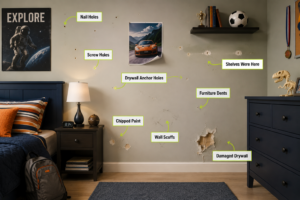 Kids’ rooms change constantly. Posters go up and come down. Shelves get added.
Furniture gets rearranged. Decorations change as quickly as their interests do.
By the end of summer, you may find nail holes, screw holes, drywall anchor holes, furniture dents, chipped paint, wall scuffs or damaged drywall.
Back-to-school season can be a good opportunity to reset the space without completely redoing it. Sometimes repairing the drywall and adding a fresh coat of paint is enough to make the entire room feel refreshed.
Hallways and Stairwells
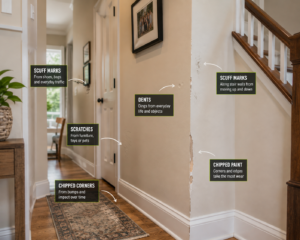 These are the highways of the house—and they tend to show it.
Look closely and you’ll probably find scuff marks, chipped corners, dents and scratches from everyday traffic.
Some marks may simply need cleaning or paint. Deeper dents and gouges may require drywall patching and painting to properly restore the surface.
Family Rooms and Basements
 If your house became the neighborhood gathering spot this summer, that’s a good thing.
It can also mean your walls took a few hits.
Basements, playrooms and family rooms commonly develop drywall dents, wall holes, damaged corners and paint scuffs simply because they’re heavily used spaces.
A few repairs can make the room feel put back together without changing the space your family loves using.
Entryways and Mudrooms
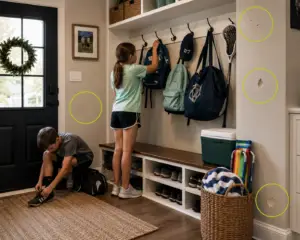 Shoes. Backpacks. Sports bags. Lacrosse sticks. Beach chairs. Coolers.
Everything seems to pass through the same few feet of the house.
That makes entryways and mudrooms particularly vulnerable to scratched walls, drywall dents, chipped paint and corner damage.
As backpacks replace beach bags, take a look at the walls behind all that activity.
Not Every Wall Imperfection Is Just a Paint Problem
It can be tempting to grab the leftover paint from the basement and cover every mark you see.
Sometimes that’s all you need.
Other times, painting over damage actually makes it more noticeable.
If drywall has been dented, gouged or punctured, the surface usually needs to be repaired and smoothed before painting. Otherwise, fresh paint simply follows the damaged contours underneath.
A proper patch and paint drywall repair may involve filling or replacing the damaged area, applying joint compound, sanding, priming, matching the surrounding texture and then painting.
The size and type of damage determine how much work is actually necessary.
Holes and Dents: What Can Be Repaired?
Drywall is durable, but it’s also designed to be repairable.
Common drywall and sheetrock repairs include:
- Nail and screw holes
- Drywall anchor holes
- Doorknob holes
- Furniture dents
- Wall gouges and scrapes
- Damaged drywall corners
- Torn drywall paper
- Small and medium wall holes
- Cracks in walls and ceilings
- Damaged drywall seams
- Previous DIY patches
- Ceiling holes
- Water-damaged drywall after the source is corrected
A small area of damage does not necessarily mean an entire wall needs to be replaced.
In many cases, a targeted drywall repair or sheetrock repair can restore the damaged section while leaving the rest of the wall intact.
Drywall or Sheetrock: What’s the Difference?
If you’ve been searching online for both sheetrock repair and drywall repair, you’re essentially looking for the same type of service.
Drywall is the general term for the gypsum wallboard used throughout most modern homes. Sheetrock® is a brand of drywall, although many homeowners use “sheetrock” as the everyday name for the material.
Whether you call it drywall, sheetrock or simply “the wall,” the repair process depends more on the type of damage than what you call it.
Why Patch and Paint Often Belong Together
The goal of repairing drywall isn’t simply to make a hole disappear.
It’s to make the repair disappear.
That’s where finishing becomes important.
Once damaged drywall has been patched, the repaired area may need to be sanded, primed, texture matched and painted to blend with the surrounding wall.
And sometimes that gallon of paint you’ve had in the basement for five years isn’t going to match as perfectly as you expect.
Walls change over time. Sunlight, cleaning, normal wear and aging can subtly alter the existing finish. Depending on the location and size of the repair, painting the full wall from corner to corner may provide a more consistent appearance than touching up one small area.
A good drywall repair and painting plan considers the finished room, not just the hole.
End of Summer Looks Different Across the Country
Back-to-school season may happen everywhere, but what summer leaves behind isn’t exactly the same in every part of the country.
Climate, storms, humidity and temperature can all affect walls and ceilings. As you’re looking around for everyday dents and scrapes, it’s worth watching for signs that may point to something more than normal wear.
Northeast: Humidity, Summer Storms and the First Signs of Fall
Across New Jersey, New York, Pennsylvania, New England and surrounding areas,
August can bring high humidity, thunderstorms and heavy rain followed by the first cooler nights of the season.
In addition to everyday wall dents, holes, scuffs and paint damage, homeowners may begin noticing:
- Ceiling stains following summer storms
- Bubbling or peeling paint
- Cracks around windows and doors
- Drywall seam cracks
- Moisture-related discoloration
- Soft or damaged drywall
- Basement wall or ceiling damage
A ceiling stain shouldn’t simply be painted over. If moisture is involved, identifying and correcting the source should come before the ceiling drywall repair.
Midwest: Summer Storms Give Way to Cooler Weather
In Ohio, Michigan, Illinois, Indiana, Wisconsin, Minnesota and surrounding states, the transition from summer into fall can bring significant changes in temperature and humidity.
While checking your home for the usual end-of-summer drywall damage, pay attention to:
- Wall and ceiling cracks
- Drywall joint or seam issues
- Basement moisture damage
- Ceiling stains
- Garage drywall damage
- Peeling or damaged paint
- Cracks around doors and windows
Basements and garages are especially easy to overlook. Before another Midwest winter arrives, late summer can be a useful time to check these areas for accumulated wall and ceiling damage.
South: Heat, Humidity and Storm Season
In Florida, Georgia, Texas, the Carolinas and throughout much of the South, “end of summer” doesn’t necessarily mean the end of summer weather.
Air-conditioning systems are still working hard, humidity remains high and tropical weather can bring significant rainfall.
Homeowners should keep an eye out for:
- Brown or yellow ceiling stains
- Bubbling paint
- Soft drywall
- Moisture-damaged drywall
- Ceiling cracks
- HVAC-related wall or ceiling openings
- Water damage following heavy rain
If you find water-damaged drywall, don’t rush to patch or paint it. The source of the moisture—whether roofing, plumbing, HVAC or something else—needs to be resolved first.
Once the area is dry and the underlying issue has been corrected, the damaged drywall can be properly repaired.
West: Heat, Dry Conditions and Regional Differences
From California and Arizona to Colorado and the Pacific Northwest, “summer” can mean very different things.
Hotter, drier climates may make existing cracks more noticeable, while wetter areas may require homeowners to pay closer attention to moisture as fall approaches.
Depending on your area, watch for:
- Drywall cracks near doors and windows
- Ceiling cracks
- Joint and seam cracks
- Paint fading or damage
- Wall dents and impact damage
- Signs of water intrusion
- Previous repairs that have cracked again
If a crack continues to return after being patched, it may be worth determining why before repairing it again.
When a Small Problem Deserves a Closer Look
Most wall damage has a simple explanation.
The dent behind the door? Probably the doorknob.
The gouge near the stairs? Someone carried something upstairs that was just a little too wide.
The collection of tiny holes in your teenager’s bedroom? No investigation necessary.
Other damage deserves more attention.
Be cautious about simply patching or painting over:
- Recurring cracks
- Brown or yellow ceiling stains
- Bubbling paint
- Soft drywall
- Sagging ceiling drywall
- Areas that feel damp
- Repairs that repeatedly crack
- Discoloration that continues to grow
These can sometimes indicate a plumbing leak, roof leak, HVAC condensation, excess humidity or another issue behind the surface.
When that’s the case, the source of the problem should be addressed first. Drywall repair and painting should be the finishing step.
Sometimes Taking Care of Your Home Means Taking Care of the Little Things
There are rooms in our homes that will never stay perfect.
The hallway where everyone drops their things.
The bedroom where your child has changed the posters on the wall a dozen times.
The basement where the kids and their friends spent half the summer.
The family room where everyone actually gathers.
Those are usually the rooms that show the most wear because they’re the rooms being used the most.
You don’t have to keep a house pristine to take pride in it. Sometimes maintaining a home simply means repairing the little things when you finally have a chance to notice them.
A few drywall repairs, patched holes, repaired dents or freshly painted walls can make a familiar room feel cared for again.
PatchMaster specializes in drywall repair, sheetrock repair, ceiling repair, drywall installation, texture matching, patch and paint services and interior painting for exactly these kinds of projects.
But whether you call someone or tackle a project yourself, start by understanding what caused the damage, what type of repair it needs and whether there is an underlying problem that should be addressed first.
Summer is supposed to leave memories behind.
The dents, holes and scuffs don’t necessarily have to stay with them.