
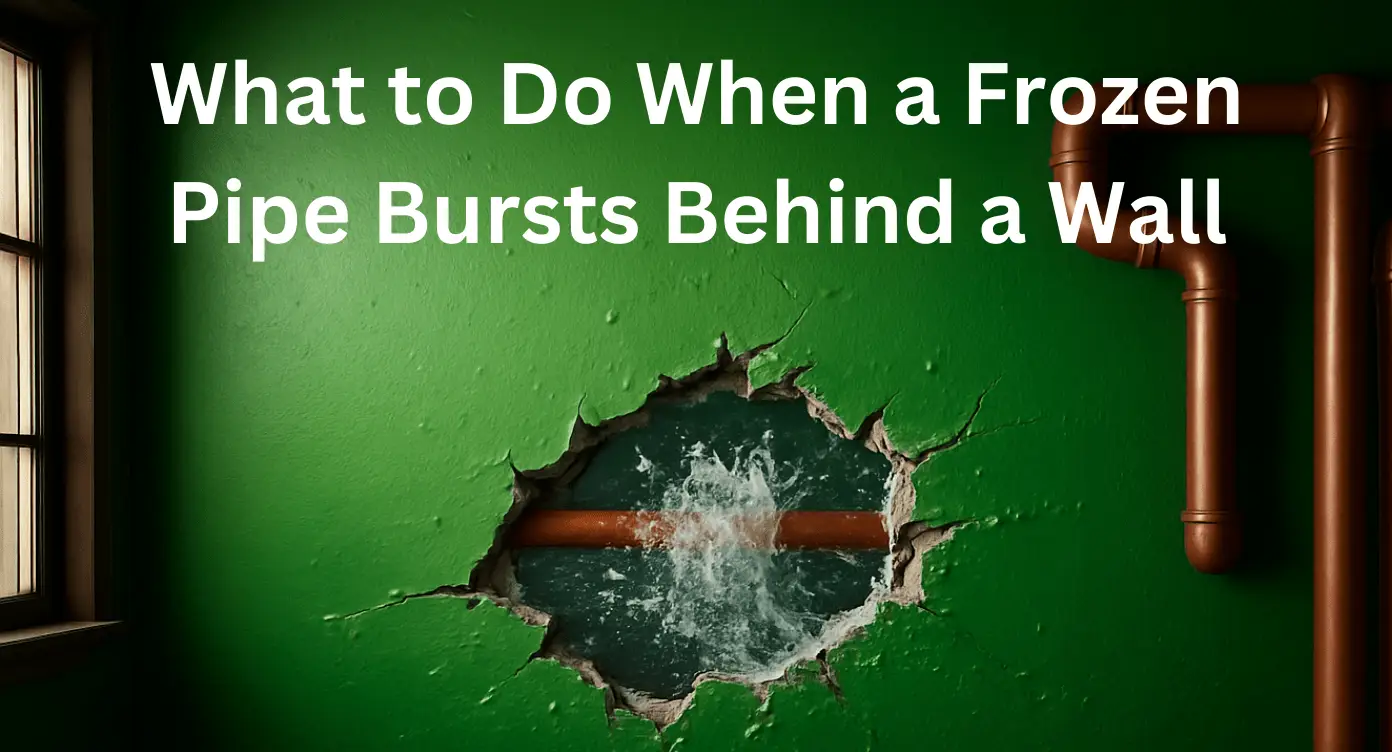
A frozen pipe bursting behind a wall is one of the most stressful home emergencies. You may first notice water stains, bubbling paint, or damp drywall, but the real damage is often hidden.
Acting quickly and correctly can prevent structural damage, mold growth, and costly repairs.
Below is a clear, homeowner-friendly guide on what to do immediately and what to avoid when dealing with frozen pipe drywall damage.

Shut Off the Water Immediately
As soon as you suspect a burst pipe:
- Turn off your home’s main water supply
- If possible, shut off electricity to the affected area
- Avoid opening walls until the water source is fully controlled
This step limits further burst pipe wall repair needs and reduces water saturation behind the drywall.
Drying Isn’t Enough. Wet Drywall Is Often Compromised.
A common misconception is that drywall can simply “dry out.”
In reality:
- Saturated drywall loses structural integrity
- Moisture trapped behind walls can lead to mold
- Paint and texture will fail if repairs are delayed
In many cases, emergency drywall repair involves removing damaged sections rather than salvaging them.
 Look for Signs of Hidden Drywall Damage
Even if water isn’t pouring out, drywall can absorb moisture quickly.
Common signs include:
- Soft or sagging drywall
- Bubbling or peeling paint
- Ceiling stains or discoloration
- Musty odors near walls or baseboards
These are early indicators of frozen pipe drywall damage that shouldn’t be ignored.
Avoid Quick Cosmetic Fixes
Homeowners often attempt to patch or repaint too soon.
This can cause:
- Recurring stains bleeding through paint
- Cracks forming weeks later
- Hidden moisture problems worsening
Temporary fixes may look better in the short term but often increase long-term repair costs.
Understand Why Timing Matters
The longer water-damaged drywall remains in place, the more extensive the repairs can become.
Prompt action helps:
- Minimize the size of drywall replacement
- Prevent secondary damage to framing or insulation
- Reduce the risk of mold growth
For a deeper look at why speed matters, check out The Cost of Delay: Why Immediate Drywall Repair Is Essential After Water Damage.
When to Call for Emergency Drywall Repair
You should seek professional help if:
- Water damage is behind walls or ceilings
- Drywall feels soft, warped, or swollen
- Stains reappear after drying
- The damage followed a frozen or burst pipe
Emergency situations require more than surface-level repairs to restore walls safely and correctly.
A burst pipe behind a wall isn’t just a plumbing issue; it’s a structural one. Understanding how frozen pipe drywall damage spreads and why burst pipe wall repair should be handled quickly can save time, money, and frustration.
Addressing the problem early is always easier than fixing what happens when it’s ignored.
READ MORE:
The Cost of Delay: Why Immediate Drywall Repair is Essential After Water Damage

